
Executive Summary: How to eliminate reactive energy fines in Colombia? Inductive loads like motors and transformers waste power, generating penalized reactive energy on your utility bill. The solution is to install a capacitor bank tailored to your load profile based on power quality studies. This corrects the power factor to levels above 0.9, eliminating grid operator surcharges.
If you manage an industry, a hotel, or a commercial building on the Caribbean Coast, you have likely noticed a strange and increasing charge on your utility bill: Reactive Energy Surcharge.
Many managers pay this penalty month after month without knowing what it means, assuming it is a mandatory "tax" from the grid operator. The reality, from an engineering perspective, is that you are losing millions of pesos due to inefficiency in your own equipment, and best of all: it is 100% fixable.
At Gestiones Eléctricas SAS, we specialize in energy auditing. Here we explain technically why you are being fined and how our engineering can stop that financial leak.
📉 1. What is Reactive Energy and why are you fined?
To understand it simply: imagine buying a glass of beer. The liquid you actually drink is the Active Energy (what powers your machines). The foam, which takes up space in the glass but doesn't quench your thirst, is the Reactive Energy.
Equipment like industrial motors, elevators, central air conditioners, and transformers need that "foam" (magnetic fields) to function. The problem is that if your company demands too much Reactive Energy from the public grid, you congest the operator's lines.
By regulation (CREG Resolution 015), if your reactive energy consumption exceeds allowed limits, the operator applies a penalty that multiplies month after month.
🔬 2. The Hidden Danger: Poor Power Quality (Harmonics)
Besides hitting your pocket, excess reactive energy or "electrical noise" (harmonics) damages your own assets.
Poor power quality causes:
- Excessive heating in cables and transformers (reducing their lifespan).
- Unexplained breaker tripping.
- Damage to sensitive electronic boards.
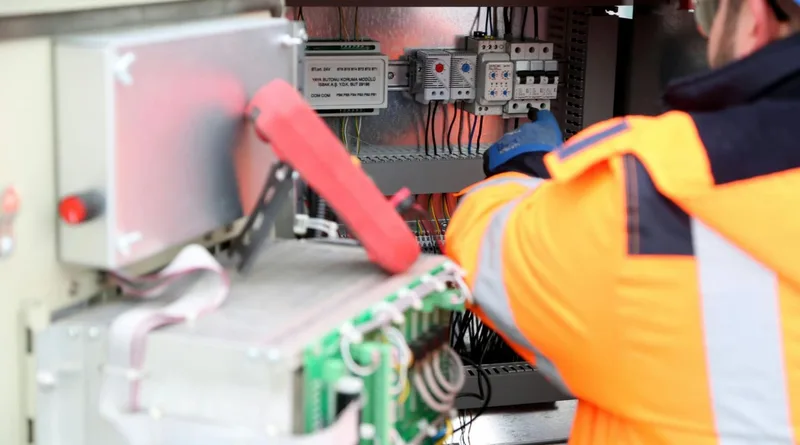
To detect this, looking at the bill is not enough. At Gestiones Eléctricas, we perform a Power Quality Analysis under NTC 5001 standards, installing calibrated network analyzers that monitor your plant's behavior over several days to find exactly which machine is causing the problem.
🛠️ 3. The Solution: Power Factor Correction
The good news is that you don't have to keep paying this penalty. The engineering solution is the installation and calibration of a Capacitor Bank.
These systems act as an internal "filter." Instead of requesting that reactive energy from the grid operator (and paying the surcharge), the capacitor bank generates it locally within your plant.
Why choose us for this solution? We don't install equipment randomly. Our process includes:
- Measurement and Diagnosis: We evaluate your network to size the exact system you need.
- Design and Installation: We assemble automatic capacitor panels that adjust in real time to your machines' demand.
- Monitoring and Guarantee: We ensure that next month, the reactive surcharge on your bill drops to $0.
🚀 Stop giving money away to the grid operator
The return on investment (ROI) of correcting your reactive energy is one of the fastest in the industry; many companies recover their investment in less than 6 months just with what they save in penalties.
If you see reactive surcharges on your bill, it's time to apply engineering.
👇 Send us a photo of your utility bill and let's schedule an energy audit: 3018141027